Rockstars Awards 2026
Which project will you vote for?
An independent expert jury has selected three projects in each award category. Now it is your turn. Vote for your favourite for the Innovator Award and the Theme Award: Engineering under pressure. Voting is open until .
The award categories
Innovator award
& theme award.
The Rockstars Awards put the spotlight on projects that show what is possible when technology, craftsmanship and collaboration come together. The awards ceremony is the stage where we showcase the most inspiring examples of innovation in IT, both within and beyond Team Rockstars IT. In doing so, we demonstrate what is possible when teams combine technology, quality, impact and happiness at work, helping to raise the standard across the IT sector.
Rockstars Innovator Award
Innovator
Award
For the team that shows courage in digitalisation and innovation - even when it means going off the beaten track.
Selection criteria · Expand a criterion to read the explanation.
A bold approach
The team chose a rebellious approach. Rather than standard solutions, they embraced an innovative way of thinking and working. They did not shy away from risks, but ventured into unfamiliar territory.
Digital innovation
There is clear evidence of the use of new technologies or digital methods. It does not have to be technologically perfect, but it must be innovative, offer opportunities to learn and be relevant.
Inspiration for others
The case inspires other organisations to step outside their comfort zones. Through knowledge sharing, openness about lessons learned and community involvement, it creates a story that others want to put into practice straight away.
What does the winner receive?
The winner receives AI innovation consultancy credits worth €10,000 to further develop your innovation and make an immediate impact in practice.
Rockstars Theme Award
Engineering
under pressure
For the team or company that has developed a concrete, working solution in AI readiness, cloud sovereignty or security - or a combination of these.
Selection criteria · Expand a criterion to read the explanation.
Working Under Pressure
The tech world is under unprecedented pressure: rapid developments in AI, stricter sovereignty requirements and a constantly changing threat landscape. This criterion assesses how the team has handled that pressure. Did they turn urgency into action? Did they create a solution that not only addresses today's challenges, but also holds up when the world changes tomorrow?
AI Impact
The team has taken a deliberate, forward-thinking approach to AI within the project. This may mean that AI is already being actively used, or that there is a concrete plan to use AI for new insights, processes or developments. What matters is that the team has challenged itself to seriously explore the role of AI - both today and in the future.
Cloud sovereignty
The team has made deliberate choices regarding cloud sovereignty. During the development and/or implementation of the solution, opportunities within European cloud infrastructure were actively explored. There is a well-founded vision that clearly explains and justifies these choices.
Security
The team treated security as a starting point rather than an afterthought. Potential vulnerabilities have been identified, and a clear strategy has been developed for both the current situation and future developments.
What does the winner receive?
The winner receives AI innovation consultancy credits worth €10,000 to further develop your solution into a robust, future-proof solution in AI, cloud sovereignty and security.
Rockstars Awards 2026
The nominees
Vote nowExplore the nominated projects below and vote for the case that inspires you the most. Which project do you think makes a difference? Which team do you think deserves a place on the podium?
Theme Award
3 nominees
Engineering under pressure
Essent

Millions of accounts moved to a new identity platform
Essent modernised its identity landscape together with Team Rockstars IT using Auth0, Domain-Driven Design and an event-driven architecture. Lazy migration transferred millions of accounts without any significant impact on end users.
Project description: Essent
Millions of Essent and energiedirect.nl customers use digital services every day that rely on secure and reliable sign-in. For years, these services ran on an outdated Identity Provider that was becoming increasingly difficult to scale, maintain and keep ready for the future. At the same time, replacing it could not be allowed to affect the millions of users who depend on these systems.
Together with Team Rockstars IT, Essent carried out a large-scale modernisation of its entire identity landscape. Auth0 was selected as the new identity solution, supported by a new architecture based on Domain-Driven Design and event-driven principles. Instead of a traditional migration in which all users are transferred at once, the team chose an innovative lazy migration strategy. Users were automatically migrated when they signed in, making the transition virtually invisible and avoiding the risks of a large-scale "big bang" migration. This allowed the old and new environments to coexist temporarily until all users had been successfully transferred.
Alongside the migration of millions of accounts, the underlying business logic was completely redesigned. Domain-Driven Design and an event-driven architecture created a flexible, future-proof platform in which authentication, authorisation and user management became easier to manage and scale. At the same time, outdated applications and databases were phased out, and the security of customer data was strengthened at a structural level.
The result is a modern digital foundation used by millions of customers every day. Essent completely renewed one of the most critical parts of its digital services without any significant impact on end users. This case demonstrates how technical innovation, smart architectural choices and careful execution can come together in a project of enormous scale and societal relevance.
TenneT

One gateway for responsible AI use
TenneT and Team Rockstars IT developed a central AI Gateway for authentication, authorisation, logging, cost management and compliance. Teams can use AI securely, with central visibility into usage and data processing.
Project description: TenneT
The use of AI at TenneT grew rapidly over recent years. Teams experimented with tools such as ChatGPT, Claude and other AI services to develop faster and explore new possibilities. However, this also introduced risks. There was insufficient visibility into which AI services were being used, where company data was going, which contracts were active and how compliance with regulations such as the GDPR, NIS2 and the European AI Act was being ensured. For an organisation responsible for a large part of Europe's electricity infrastructure, this created a growing need for control, governance and transparency.
Together with Team Rockstars IT, TenneT therefore developed a central AI Gateway that serves as the access point for all AI applications within the organisation. Instead of restricting or prohibiting AI use, the team chose an approach that enabled innovation within clear boundaries. The gateway centralises authentication, authorisation, logging, cost management and compliance checks, allowing development teams to use approved AI models quickly and securely. The platform was also designed around open standards, so models, providers and future technologies can easily be replaced or added without affecting connected applications.
The AI Gateway grew into an organisation-wide platform that allows development teams to deploy AI functionality for both proofs of concept and business-critical applications. It also provides the foundation for new innovations such as Retrieval-Augmented Generation (RAG), agentic AI solutions and AI-assisted software development. By organising compliance, security and governance centrally, teams no longer have to address these issues individually, allowing new AI initiatives to be delivered considerably faster. The platform also provides full visibility into usage, costs, audit logging and data processing, simplifying accountability to auditors and regulators.
As a result, TenneT has transformed AI from a fragmented landscape of individual initiatives into a shared, controlled capability for the entire organisation. Development teams can experiment and innovate safely while demonstrably meeting strict compliance and security requirements. Where AI previously often prompted discussions about risks and prerequisites, TenneT now has a future-proof foundation that brings innovation and governance together. This case demonstrates how technical architecture, platform thinking and organisational change can jointly enable responsible AI adoption at scale.
VodafoneZiggo

Automating 15,000 network components
VodafoneZiggo and Team Rockstars IT are automating the installation and activation of approximately 15,000 Remote PHY Devices. Asynchronous workflows connect systems, teams and network equipment for a controlled rollout.
Project description: VodafoneZiggo
VodafoneZiggo is undertaking one of the largest upgrades to its fixed network in recent years. A key part of this is replacing and commissioning approximately 15,000 Remote PHY Devices (RPDs), network components that bring capacity closer to end users and support the further rollout of high-speed internet connections. Installing and activating this equipment involved a complex chain of manual steps spread across different systems, teams and technical domains. At scale, this caused delays, limited control and an increased risk of errors.
Together with VodafoneZiggo, Team Rockstars IT developed a solution that automates this entire chain. It uses advanced asynchronous workflows to orchestrate processes across multiple platforms and network domains. The solution accounts for dependencies, waiting times and disruptions in individual systems without requiring entire processes to restart. Where existing systems were not yet fully suited to end-to-end automation, the team developed controlled solutions to keep the automation chain reliable and transparent. The platform therefore does more than automate a single technical task: it connects software, processes, physical network equipment and users within one integrated way of working.
Alongside technical delivery, there was a strong focus on adoption within the organisation. Network engineers and end users were involved in designing, validating and testing the solution from the outset. Testing under production-like conditions and with physical hardware allowed the team to align the automation with day-to-day operations. The project also brought software development, architecture, product management and network expertise closer together, so decisions were increasingly made from the perspective of the entire chain rather than individual systems.
The result is a scalable solution that makes an important contribution to upgrading the VodafoneZiggo network. Manual handovers between teams have been significantly reduced, progress in network processes has become more visible, and large-scale rollouts can take place with greater control. The approach is now also used as a reference for other network domains within VodafoneZiggo. The solution therefore goes beyond the original RPD challenge and provides a foundation for further network automation. This case demonstrates how innovative software development, in-depth domain knowledge and close collaboration can lead to a practical, scalable solution for one of the most complex operational challenges in modern telecom networks.
Innovator Award
3 nominees
Innovator Award
KPN

A custom framework for SQL Server graph data
KPN developed GORM: a Graph Object-Relational Mapper for SQL Server. The framework reduces handwritten SQL and makes graph data more accessible, easier to test and simpler to maintain.
Project description: KPN
At KPN, an existing application is being completely rebuilt using modern technologies such as Dapr and SQL Server's graph functionality. This approach offered significant advantages for modelling complex relationships within the domain, but also introduced a challenge. There was no suitable Object Relational Mapper (ORM) for working with graph data in SQL Server, meaning developers would have to embed complex queries directly in application code. This would increase maintenance demands, technical complexity and dependence on specialist knowledge.
Instead of adapting the architecture to the limitations of existing tooling, the team chose a different path. It developed its own framework: GORM, a Graph Object-Relational Mapper inspired by the principles of Entity Framework. This solution provides an abstraction layer between the application and the database, allowing developers to work with domain objects, relationships and graph structures without constantly writing complex SQL queries. GORM centralises query logic, makes graph technology more accessible to developers and creates a single place for optimisations, validations and further technical improvements.
Developing GORM required in-depth technical expertise and a strong focus on quality, performance and maintainability. The framework was built and tested iteratively, with transactions, logging, error handling and scalability playing an important role. This also created a reusable technical foundation that adds value to the current application and can be used in future applications involving graph data. Developers can therefore focus more on business logic while the complexity of data access is managed centrally.
The result is a solution that makes graph functionality available within the organisation in a consistent, secure and maintainable way. The amount of handwritten SQL has been significantly reduced, new functionality can be developed faster, and the application has become more testable and future-proof. This case shows how innovation sometimes comes from developing missing technology yourself. By solving a fundamental problem at framework level, KPN has established a lasting technical foundation that makes the value of graph technology accessible to a broader group of developers.
MQ-Group

More attention to the conversation with Savi
MQ-Group developed Savi together with domain experts, AI engineers and consultants. The platform turns conversations into draft reports, allowing personal injury professionals to focus more on the conversation. The professional retains final responsibility.
Project description: MQ-Group
Professionals in the personal injury sector conduct long, complex conversations with injured people every day. During these conversations, they need to listen, ask follow-up questions, process legal and medical information and produce detailed reports at the same time. This administrative burden takes considerable time and can distract from what should be central: the personal conversation with the injured person.
Together with domain experts, AI engineers and consultants, MQ-Group developed a platform that combines artificial intelligence with in-depth knowledge of personal injury practice. Savi turns conversations into draft reports aligned with the working methods of different user groups, such as claimant representatives, claims experts, occupational assessment specialists and case managers. The professional always remains responsible for the final result. The solution is available through mobile applications and has been expanded in recent years with more advanced AI models, organisation-specific report structures and support for additional documentation within case files.
Beyond its technological innovation, Savi stands out for the way the platform was developed together with the market. Insurers, expert assessment firms and other partners in the sector jointly invested in developing a shared solution to a common problem. This created a platform that is not only technically strong, but also meets the quality standards, privacy requirements and workflows of a traditionally cautious, highly regulated sector. Using AI to support professionals rather than replace their expertise combines efficiency with human oversight, care and craftsmanship.
The result is a widely adopted platform now used by dozens of organisations, which has generated thousands of reports. Professionals spend less time on documentation and can focus more on the conversation itself, while organisations benefit from faster, more consistently structured reports that are easier to verify. This case demonstrates how AI can not only accelerate processes, but also contribute to more personal attention in a sector where trust, empathy and care are essential.
ODBN

 Read the ODBN client story
From permit documents to usable data
ODBN and Team Rockstars IT use OCR and AI to turn historical permits into structured data. In ten weeks, they developed a working prototype that makes information traceable to its original source.
Project description: ODBN
This project addresses a challenge faced by many public-sector organisations: large amounts of information are available, but not in a form that can be used efficiently. At Omgevingsdienst Brabant-Noord, permit officers and inspectors had to spend an average of around two hours per location searching historical permits to build a complete and reliable picture. The information existed, but was spread across large volumes of unstructured documents, increasing the risk of errors, incomplete information and local shadow records.
Together with Team Rockstars IT, ODBN developed an innovative approach focused on converting documents into structured data rather than improving search functionality. Permits were first digitised and enriched using advanced OCR technology. AI was then used to automatically extract relevant attributes, such as locations, activities and permit information, from documents and store them in a central data layer. Reliability was central: the solution does not generate new information, but refers exclusively to data explicitly present in the original source. This created a verifiable, explainable and traceable system suitable for use within a public-sector organisation.
The approach was developed and validated with permit officers and inspectors in just ten weeks. What began as a research assignment grew into a working prototype that could be used directly in practice. Involving users actively from the start produced a solution that not only works technically, but also fits the daily work of permitting and inspection. Scalability was considered from the outset, making the approach applicable to hundreds of thousands of permits and potentially suitable for other environmental agencies as well.
The result is a fundamentally different way of working. Employees no longer need to manually reconstruct information from extensive documents, but have direct access to the relevant data needed for decision-making. This increases efficiency, reduces the risk of errors and creates more room for substantive assessment and risk-based inspection. This case demonstrates how AI can be used responsibly in the public sector by making the technology fully explainable and traceable, while taking an important step in digitising public-sector processes.
Voting is open until October 5 at 12:00 PM.
 The winners will be announced on 6 October during Rockstars Valley, Team Rockstars IT’s largest technology conference
Sorry. This form is no longer available.
Rockstars Awards 2026
Meet the jury.
Open a jury member's profile to read about their background.
Saskia Nijs
Executive human & AI | CIO - Humain Workforce
Saskia Nijs
Executive human & AI | CIO - Humain Workforce
About Saskia Nijs
Saskia Nijs is Interim CIO, founder of Humain Workforce and, since 2003, a leading expert at the intersection of people, technology, AI and the future of work. With more than 25 years of experience at companies including Microsoft, Philips and KLM, she is committed to a future in which robots support work, allowing people to use their talents to create greater value, impact and meaning.
Marianne Pot
Head of Data Services, Platforms & Products - ABN Amro
Marianne Pot
Head of Data Services, Platforms & Products - ABN Amro
About Marianne Pot
Marianne Pot is Head of Data Services, Platforms & Products at ABN AMRO Hypotheken and works at the intersection of strategy, technology, data and organisational development. With more than 25 years of experience in IT and digital transformation, she helps organisations achieve complex change by translating vision into concrete results. She believes that sustainable innovation emerges when technological advancement and people-centred leadership go hand in hand.
Lieke Hamers
Field Chief Technology Officer - Dell Technologies
Lieke Hamers
Field Chief Technology Officer - Dell Technologies
About Lieke Hamers
Lieke Hamers is Field Chief Technology Officer at Dell Technologies and lead of Connected Sustainable Society. With more than twenty years of experience in IT, she helps organisations with digital transformation and strategic growth. She connects technology vision with customer needs in the Netherlands and drives progress in cloud, data and AI, while actively contributing to talent development and collaboration within the ecosystem.
Marc Heusdens
Product manager and AI lead - Team Rockstars IT
Marc Heusdens
Product manager and AI lead - Team Rockstars IT
About Marc Heusdens
Marc Heusdens is a product manager and AI lead, certified PSPO III, with a background in software development and data and IoT platforms. He focuses on culture, innovation and practical impact: helping teams collaborate more effectively, enabling technology to add value and translating ideas into solutions that are actually used. In 2025, he received the Rockstars Happiness Award.
Arjen Boersma
CTO - Team Rockstars IT
Arjen Boersma
CTO - Team Rockstars IT
About Arjen Boersma
Arjen is CTO at Team Rockstars IT.
Jury
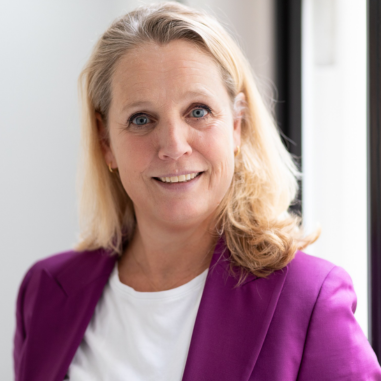
Saskia Nijs
Executive Human & AI | CIO - Human WorkforceJuror
Saskia Nijs is Interim CIO, founder of Humain Workforce, and has been a leading expert at the intersection of people, technology, AI, and the future of work since 2003. With over 25 years of experience at companies including Microsoft, Philips, and KLM, she is committed to a future in which robots support work, allowing people to use their talents to create more value, impact, and meaning.

Marianne Pot
Head of Data Services, Platforms & Products - ABN AmroJuror
Marianne Pot is Head of Data Services, Platforms & Products at ABN AMRO Mortgages and works at the intersection of strategy, technology, data, and organizational development. With more than 25 years of experience in IT and digital transformation, she helps organizations implement complex changes by translating vision into concrete results. She believes that sustainable innovation arises when technological innovation and people-centered leadership go hand in hand.

Lieke Hamers
Field Chief Technology Officer - Dell TechnologiesJuror
Lieke Hamers is Field Chief Technology Officer at Dell Technologies and leads the Connected Sustainable Society initiative. With more than twenty years of experience in IT, she helps organizations with digital transformation and strategic growth. She aligns technology vision with customer needs in the Netherlands and drives progress in cloud, data, and AI, while actively contributing to talent development and collaboration within the ecosystem.

Marc Heusdens
Product manager and AI lead - Team Rockstars ITJuror
Marc Heusdens is a Product Manager and AI Lead, as well as a certified PSPO III professional, with a background in software development and data and IoT platforms. He focuses on culture, innovation, and practical impact: helping teams collaborate more effectively, enabling technology to deliver real value, and turning ideas into solutions that people actually use. In 2025, he was awarded the Rockstars Happiness Award.

Arjen Boersma
CTO - Team Rockstars ITJuror
Arjen is CTO at Team Rockstars IT.
The nominees – Engineering under pressure
ESSENT
Millions of customers of Essent and energiedirect.nl rely on digital services every day, where secure and reliable authentication is essential. Behind these services was a legacy Identity Provider that had become increasingly difficult to scale, maintain, and future-proof.
TENNET
Within TenneT, the use of AI has grown rapidly in recent years. Teams were experimenting with tools such as ChatGPT, Claude, and other AI services to accelerate development and explore new possibilities. However, this growth also introduced risks.
VODAFONEZIGGO
VodafoneZiggo is undertaking one of the most significant upgrades to its fixed network in recent years. A key part of this transformation is the deployment and activation of approximately 15,000 Remote PHY Devices (RPDs), network components that bring capacity closer to end users and support the continued rollout of high-speed internet services.
the nominees – Innovator
kpn
Within KPN, an existing application is being completely rebuilt using modern technologies such as Dapr and the graph capabilities of SQL Server. This approach offered significant advantages for modelling complex relationships within the domain, but it also presented a challenge.
MQ-GROUP
Professionals in the personal injury sector conduct long and often complex conversations with victims on a daily basis. During these discussions, they need to listen carefully, ask the right follow-up questions, process legal and medical information, and simultaneously produce detailed reports.
ODBN
This project addresses a challenge faced by many public sector organizations: large amounts of information are available, but not in a format that can be used efficiently. Within the Brabant Noord Environmental Service (ODBN), permit officers and inspectors spent an average of around two hours per location searching through historical permits to obtain a complete and reliable overview.